Venetian Plaster Texture Paint: Create Marble-Look Walls Without Tiles
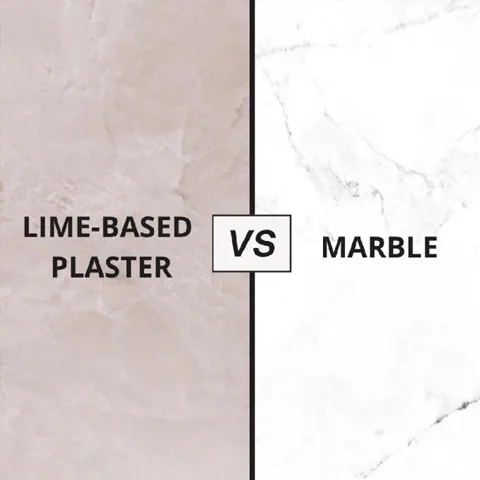
If you love marble-look walls but don’t want the cost, weight and grout lines of real stone, Venetian plaster texture paint is the perfect middle ground.
Using MacoAvell’s lime-based Venetian plaster systems, you can achieve:
- A polished, stone-like finish
- Soft movement and natural depth in colour
- Seamless walls with a luxurious, handcrafted feel
All without tiling, hacking or heavy stone slabs.
This guide explains what Venetian plaster texture paint is, where to use it, and how MacoAvell Vellma and related finishes can help you get a marble-inspired look in Malaysian homes, hotels and commercial spaces.
What Is Venetian Plaster Texture Paint?
Venetian plaster is a lime-based decorative plaster that is applied in thin layers and then compressed and polished with a trowel. The result is a surface that:

- Looks like polished stone or marble
- Has subtle movement, colour variation and depth
- Can range from soft satin to high gloss
Unlike normal paint:
- It’s not just a coloured film on the wall
- It becomes part of the surface, with a tactile, cool-to-the-touch feel
- Light travels through thin layers, creating a rich, multi-dimensional look
In MacoAvell’s range, Vellma is the key Venetian plaster-style finish, designed to create glossy marble-like walls using lime-based technology.
Why Choose Venetian Plaster Instead of Real Marble or Tiles?
Marble and tiles have their place, but they’re not always practical for every wall.
1. Seamless, joint-free walls
With tiles or stone slabs:
- You see joints and grout lines
- The pattern is repeated
- Cutting around corners and sockets is complicated
With Venetian plaster texture paint:
- The wall reads as one continuous surface
- No grout lines or tile joints
- Corners and edges can be formed smoothly
This creates an immaculate, modern look that still feels rich and luxurious.
2. Lighter and more flexible than stone
Real marble is:
- Heavy
- Expensive to transport and install
- Not suitable for every substrate
Venetian plaster texture paint is:
- Much lighter on the wall
- Installed using trowels, not stone fixing systems
- Suitable for many interior wall types when properly primed
You get the visual effect of stone without the structural and logistical issues.
3. More design options on vertical surfaces
With Venetian plaster, you can:
- Choose from a wide range of colours and tones
- Create subtle or strong movement
- Mix and layer shades for custom effects
It’s ideal when you want a specific mood or brand colour rather than just natural stone tones.
Where to Use Venetian Plaster Texture Paint
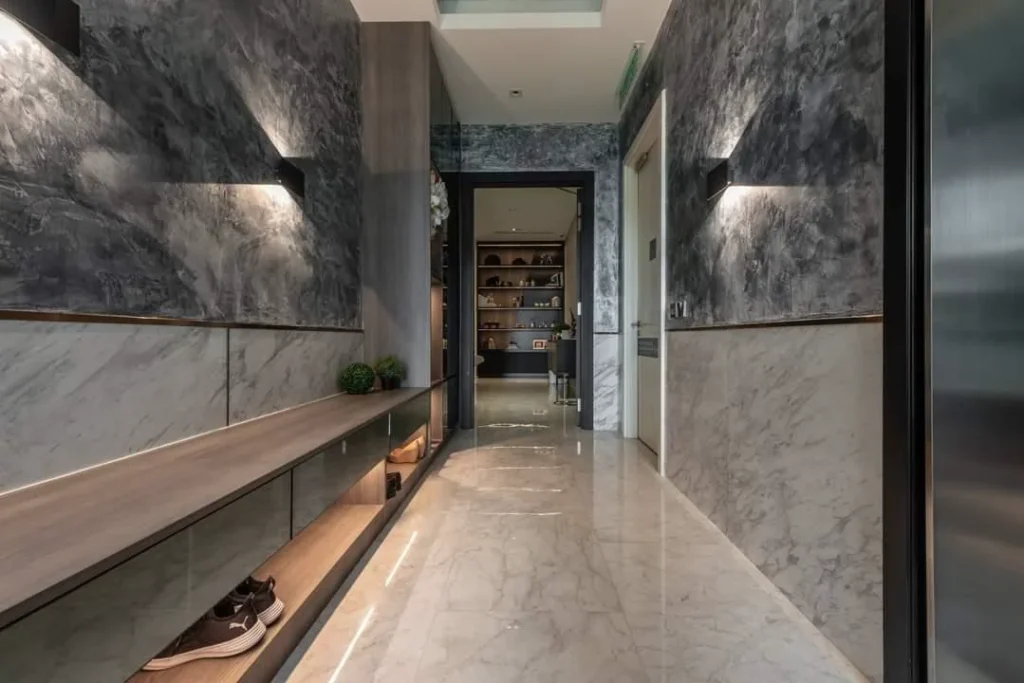
Venetian plaster works especially well on feature walls and key touchpoints.
Living room feature wall
Use Venetian plaster:
- Behind the TV console
- As a main feature wall facing the sofa
This instantly upgrades the living room to a more hotel-lobby or show unit feel. Soft greys, warm neutrals and beige tones are especially popular.
Master bedroom headboard wall
In the master bedroom:
- Apply Venetian plaster on the wall behind the bed
- Combine with simple bed linen and soft lighting
You get a calm, luxurious backdrop that feels like a boutique hotel suite.
Hotel and hospitality spaces
Great locations for Venetian plaster in hotels:
- Reception/check-in wall
- Lobby and lounge feature walls
- Premium suites and corridors
The polished, marble-like finish signals quality and attention to detail without needing heavy stone cladding.
Restaurants and cafés
For F&B:
- Use Venetian plaster behind the bar, coffee counter or dessert station
- Highlight wine or dessert display areas
- Create a unique “photo wall” for customers
Soft light bouncing off the plaster brings out the depth and pattern on the wall, making it very photogenic.
Finish Options: From Satin Sheen to High Gloss
Venetian plaster isn’t always super shiny. You can choose the level of sheen you want.
Satin / soft sheen finish
- Subtle, refined look
- Less reflection, more gentle glow
- Works well in bedrooms, calm living rooms and minimalist spaces
Classic glossy marble look
- Stronger reflection and shine
- Emphasises movement and colour variation
- Perfect for “wow factor” walls in lobbies, dining rooms and show units
With the right burnishing technique and the use of protective wax, you can adjust the level of glossiness you want the wall to have.
Advantages of Lime-Based Venetian Plaster in the Malaysian Climate
Venetian plaster from MacoAvell is lime-based, which brings extra benefits in our hot and humid environment.
Breathability
Lime-based finishes:
- Allow moisture vapour to move through the wall more easily than many plastic-like coatings
- Reduce the risk of trapped dampness
- Help surfaces stay more stable over time
This is useful in Malaysia, where humidity and temperature changes can stress interior finishes.
Comfort and indoor air quality
Lime-based decorative plasters are:
- Naturally low odour
- Generally low-VOC when formulated correctly
- Suitable for interiors that are already occupied when applied with proper ventilation
This makes them practical for renovations and upgrades in homes, hotels and commercial sites.
How Venetian Plaster Texture Paint Is Applied
While Venetian plaster is more specialised than normal paint, the basic application follows a clear sequence.
Always follow the specific product datasheet from MacoAvell, but here is the typical flow.
1. Surface preparation
- Make sure the substrate is sound, dry and clean
- Repair cracks and uneven areas
- Sand down high spots and remove loose or flaking paint
The better the base, the more uniform and elegant the final result will be.
2. Primer and basecoat
- Apply the recommended primer for Venetian plaster on your substrate
- In some systems, a basecoat in a related colour is used to support the finish
This improves adhesion and ensures the background colour supports the final look.
3. First plaster coat
- A thin coat of Venetian plaster is applied with a stainless steel trowel
- The goal is even coverage, not the final pattern
This coat provides the base layer.
4. Second coat and pattern building
- A second thin coat is trowelled on
- The applicator works in short, overlapping strokes to create movement and variation
- At this stage, the texture and pattern begin to appear
You’ll start to see the “marble” character taking shape.
5. Burnishing and polishing
- As the plaster reaches the correct stage of drying, the applicator burnishes the surface with a clean trowel
- Pressure and angle are used to compact the plaster and bring out the sheen
More passes and pressure → higher gloss.
6. Waxing and protection (optional but recommended)
- A clear or tinted wax is often applied to:
- Protect the plaster
- Intensify colour and depth
- Adjust the final sheen
In high-touch commercial locations, wax or sealer also helps with cleaning and maintenance.
Maintenance and Care for Venetian Plaster Walls
Lime-based Venetian plaster walls are surprisingly practical if you maintain them correctly.
- For light dirt: wipe gently with a soft, damp cloth
- Avoid harsh chemical cleaners
- Re-wax (if waxed) periodically according to usage and exposure
If a small area gets damaged, it is often possible to touch up or blend the patch with skilled work rather than changing the whole wall.
When to Use Venetian Plaster vs Other Texture Finishes
MacoAvell offers several texture systems. Venetian plaster is ideal when:
- You want a premium, polished, marble-like look
- The wall is a main visual focus: lobby, headboard, TV feature, bar, or reception
- You prefer a sleek, smooth, sophisticated feel rather than a heavy texture
For other situations:
- Choose a matte, cloudy finish when you want softness and a non-reflective surface.
- Choose a rougher stucco or travertine-style finish for stronger texture or rustic/industrial concepts.
In many projects, designers combine:
- Venetian plaster on 1–2 key walls
- Other MacoAvell texture systems on supporting walls
- Normal paint on the rest of the surfaces
This balances cost, design impact and practicality.
Why Specify MacoAvell for Venetian Plaster Texture Paint
MacoAvell focuses specifically on lime-based textured finishes and Venetian plaster, with local manufacturing and support in Malaysia.
Key advantages:
- Made for Malaysian interiors – performance and support suited to local climate and project types
- Consistent product range – Vellma for polished plaster-style finishes, plus complementary matte and stucco textures
- Support for professionals and serious DIY users – guidance, training options and a growing network of experienced applicators
For interior designers, architects, contractors and hotel or café owners, this means:
- Easier specification and technical discussions
- Access to real project references using the same materials
- Local supply and advice during design and installation
How to Start a Venetian Plaster Project with MacoAvell
Here’s a straightforward way to explore Venetian plaster for your home or commercial space.
Step 1 – Identify your key feature walls
Good candidates:
- Living room TV or main feature wall
- Master bedroom headboard wall
- Restaurant bar front or back wall
- Hotel lobby or reception wall
- VIP room or private dining walls
Step 2 – Collect photos and measurements
- Take clear photos of the walls and surrounding furniture
- Note the approximate width and height for each wall
This helps when estimating materials and planning design.
Step 3 – Decide the mood and colour family
Think about:
- Do you want light and airy, warm and cosy, or dramatic and bold?
- Are you aiming for soft beige, warm grey, off-white, or darker stone tones?
Venetian plaster can be coloured to suit many palettes, so having a direction helps.
Step 4 – Contact MacoAvell
Visit https://macoavell.in/ and reach out via the Contact page or WhatsApp link to:
- Share your photos and design direction
- Ask about suitable Venetian plaster systems and colour ideas
- Request a catalogue or sample information
For larger or more premium projects, discuss mock-up panels and on-site samples.
Step 5 – Choose your applicator or training path
You can:
- Work with a professional applicator familiar with MacoAvell materials
- Or, if you have experience (or want to learn), ask about training and guidance for your team
Either way, using the correct system sequence and following drying times is critical to achieving a smooth, marble-like finish.
Turn Plain Walls into Marble-Look Features Without Tiles
With Venetian plaster texture paint, you don’t need heavy stone or full tiling to enjoy marble-inspired walls.
By choosing MacoAvell’s lime-based Venetian plaster systems, you get:
- Seamless, polished walls with real depth and movement
- A range of colours and finishes to fit your interior concept
- Local support from a Malaysian specialist in textured wall design
If you’re ready to explore marble-look walls without tiles, visit MacoAvell Malaysia at https://macoavell.in/ and start planning your Venetian plaster feature wall today.